
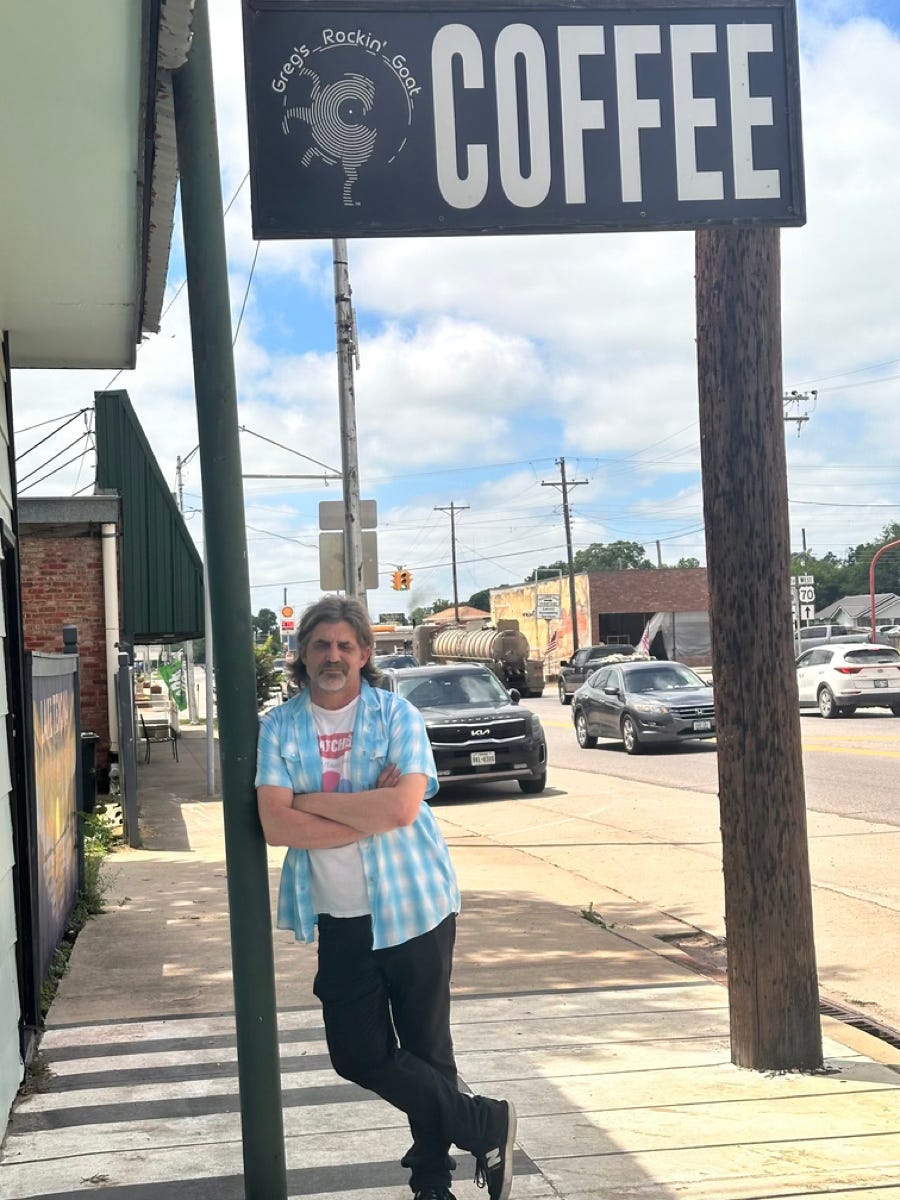
Greg: Tell me about your coffee shop and the unique story behind where your beans come from.
Greg Upchurch:
When I started this coffee shop, I was still touring with 3 Doors Down. Whenever we were off the road, I’d come back here and work on the place myself. This used to be two separate rooms, so I knocked down the wall, ran water lines, and basically figured everything out with a buddy of mine who’s a handyman. We were building the whole thing as we went.
At the time, coffee beans were honestly the least of my worries because I figured there were plenty of places to buy them. But before I even opened, a guy named J.D. Smith — a mutual family friend — came in and said, “Hey, do you want to try our beans? We’ve got a farm in Bolivia.”
I was like, “Really?”
I tried the coffee, loved it, and then he asked if I’d ever thought about roasting my own beans. I told him, “Man, I don’t know the first thing about roasting coffee.”
Well, he ended up bringing a coffee roaster here and spent about a month teaching me and my brother how to roast. We sat there every day learning how to read temperatures, adjust gas pressure, smell the coffee, and watch the beans develop — kind of like cooking a steak. It was fascinating. Coffee beans are amazing once you really start learning about them.
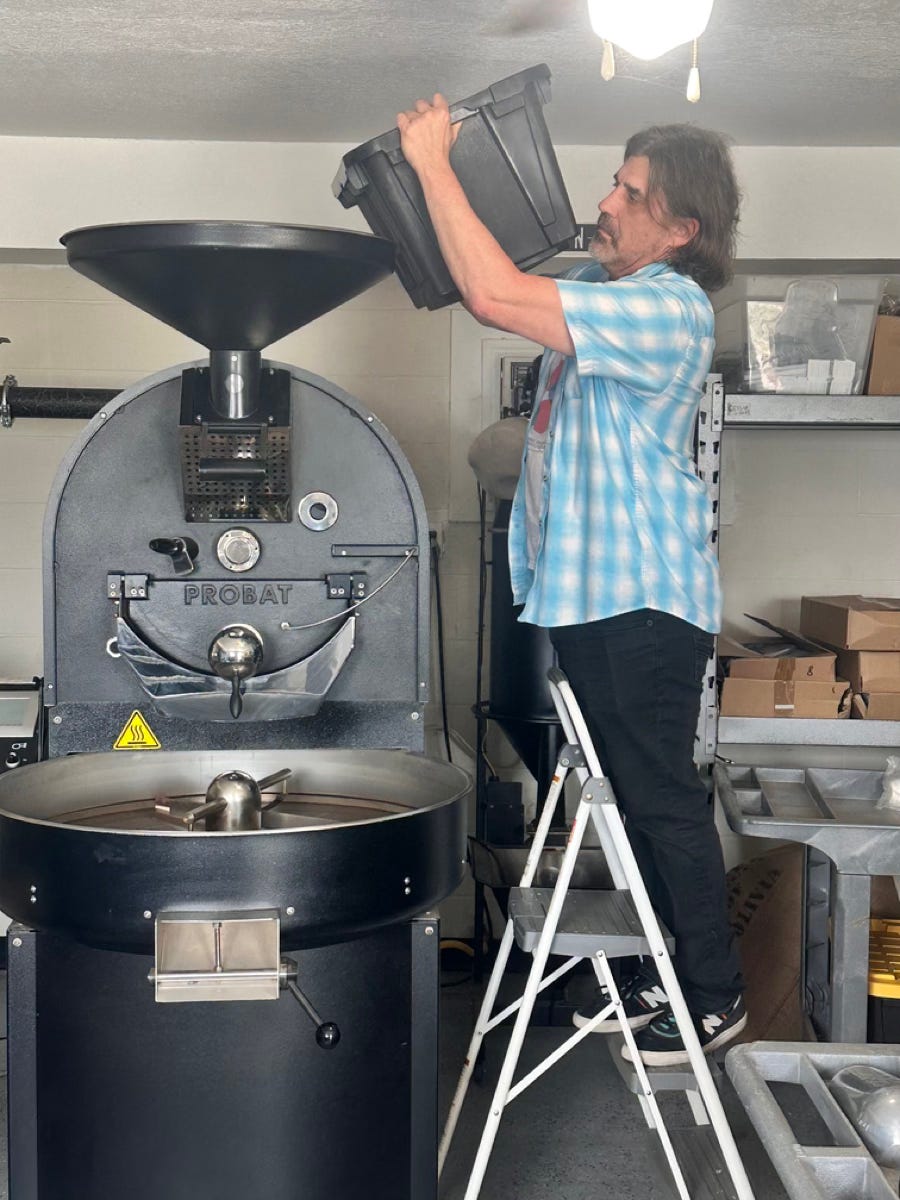
Then he said, “Why don’t you roast here? I own the farm, and we’ll ship you the beans.”
I’m thinking, “Are you kidding me? What is happening right now?”
Next thing you know, we brought in 13 tons of coffee beans, and suddenly I’m roasting coffee.
What I love about it is that there’s still an artistic side to it. It’s creative, just like music, because you’re still making something that people enjoy. The difference is, with music, you get immediate gratification from the crowd. With coffee, it’s quieter, but it still feels great when someone says, “Man, I love this coffee.”
And the freshness makes a huge difference. If somebody orders online, I roast it when they order it. We don’t keep a giant surplus sitting around. It’s all roasted to order. We’re not some huge company — it’s really just me, along with my partner in Bolivia.
It’s been a lot of fun. There’s definitely an art to it, and like anything else, the more you do it, the better you get.
Greg: There’s a real science to roasting the coffee beans, right?
Greg Upchurch:
When I’m back there roasting, it gets hot. I’ve got a speaker set up, and I usually throw on a lot of yacht rock. I just kind of disappear into my own world.
Music has always been a part of my life, whether it’s center stage or just in the background. While I’m roasting, I’m watching graphs, paying attention to the beans, listening for changes, smelling the roast — it’s all about focus.
It’s not adrenaline-fueled like playing drums, but it’s a different kind of concentration.
Honestly, it’s also been a good distraction while dealing with Brad’s passing. That’s been incredibly hard on all of us. Roasting gives me something to focus on and lets my mind step away from the grief for a little while. You still have to keep moving forward.
Sometimes there’s a short break during the roasting cycle, and I’ll grab the acoustic guitar I keep nearby and just sit there strumming along with the sound of the machine. The roaster almost has its own rhythm to it.
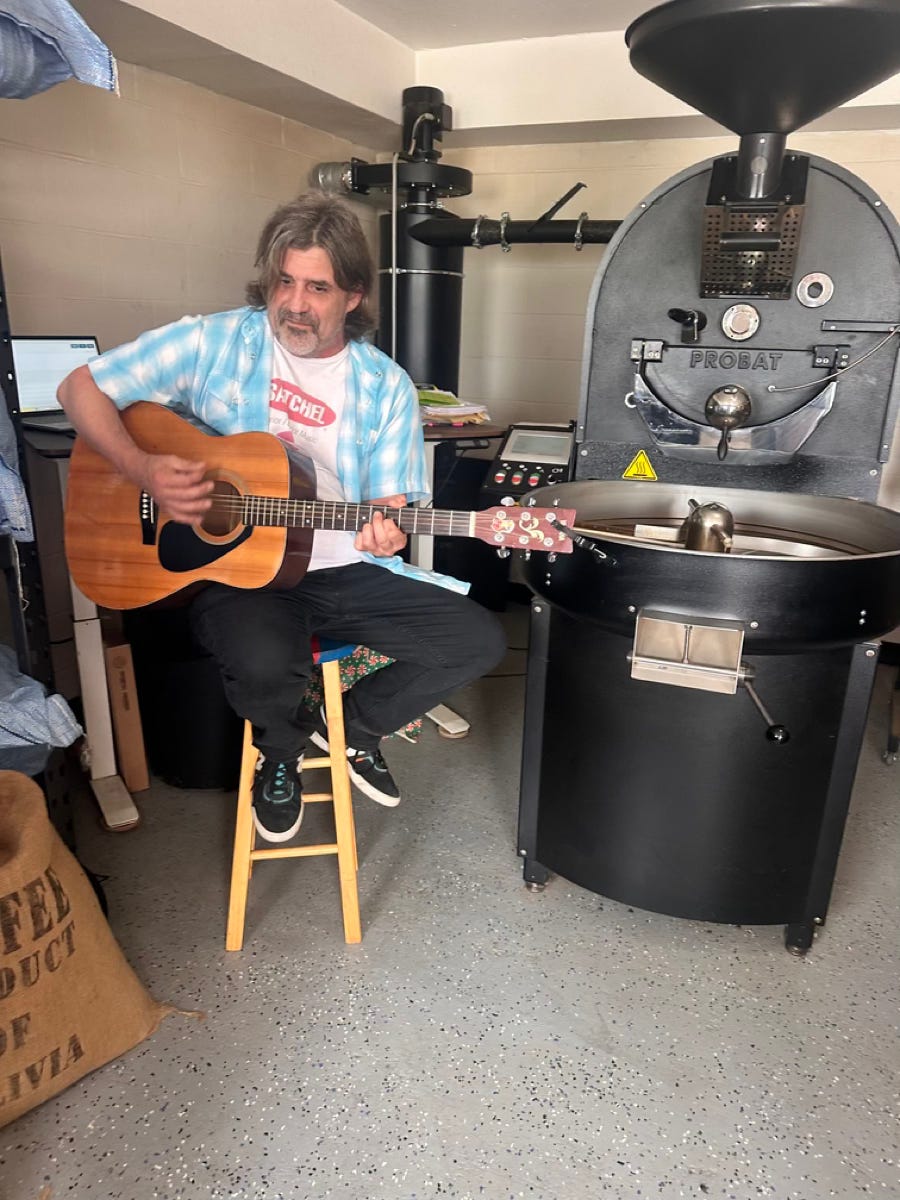
Once you’re a creative person, you never really stop creating. You don’t retire from art. Even if you’re not doing it professionally anymore, you still have to make something. You can’t just turn that part of yourself off.
Greg: Tell me about your hometown here in Kingston. Your roots are here, right?
Greg Upchurch:
Yes, I grew up right here in Kingston, Oklahoma — a tiny town with one red light.
When I was getting business cards and shirts made for the coffee shop, I joked about putting the address as “At the Light.” My buddy in Los Angeles thought that was the greatest thing ever. But honestly, that’s all you need around here. You’ll find it.
I graduated in one of the bigger classes the school had — about 75 kids. I was here from kindergarten through 12th grade. I played in the band, football, and baseball. I wasn’t exactly great at sports, but in a small town they need bodies, so I played anyway. I weighed about 120 pounds and somehow ended up on the football field.
I’ve lived in Los Angeles, Nashville, and a lot of other places, but this is the only place that’s ever truly felt like home. When I come back here, there’s a different energy for me. Maybe it’s nostalgia, maybe it’s something deeper, but I love it.
Growing up here, it felt impossible sometimes to imagine becoming a rock musician. The closest major city was Dallas, and that was an hour and a half away. I kept wondering, “How do I make this happen from here?”
But somehow it did happen.
A lot of it was being in the right place at the right time, but you also have to show up. That’s the first step.
I tell kids all the time: whenever you start thinking you can’t do something — that you’re not talented enough, smart enough, good-looking enough — that’s just fear talking. Ignore it.
Talent matters, sure, but being someone people actually want to be around matters too. You can be incredibly gifted, but if you’re impossible to work with, nobody wants to deal with you. I’ve always believed that if you can do your job, treat people well, and enjoy life with others, that goes a long way.
That matters more than ego ever will.
Greg: You’re a golfer. You used to golf a lot with Chet when you guys were on the road, right?
Greg Upchurch:
Oh yeah, we golfed all the time.
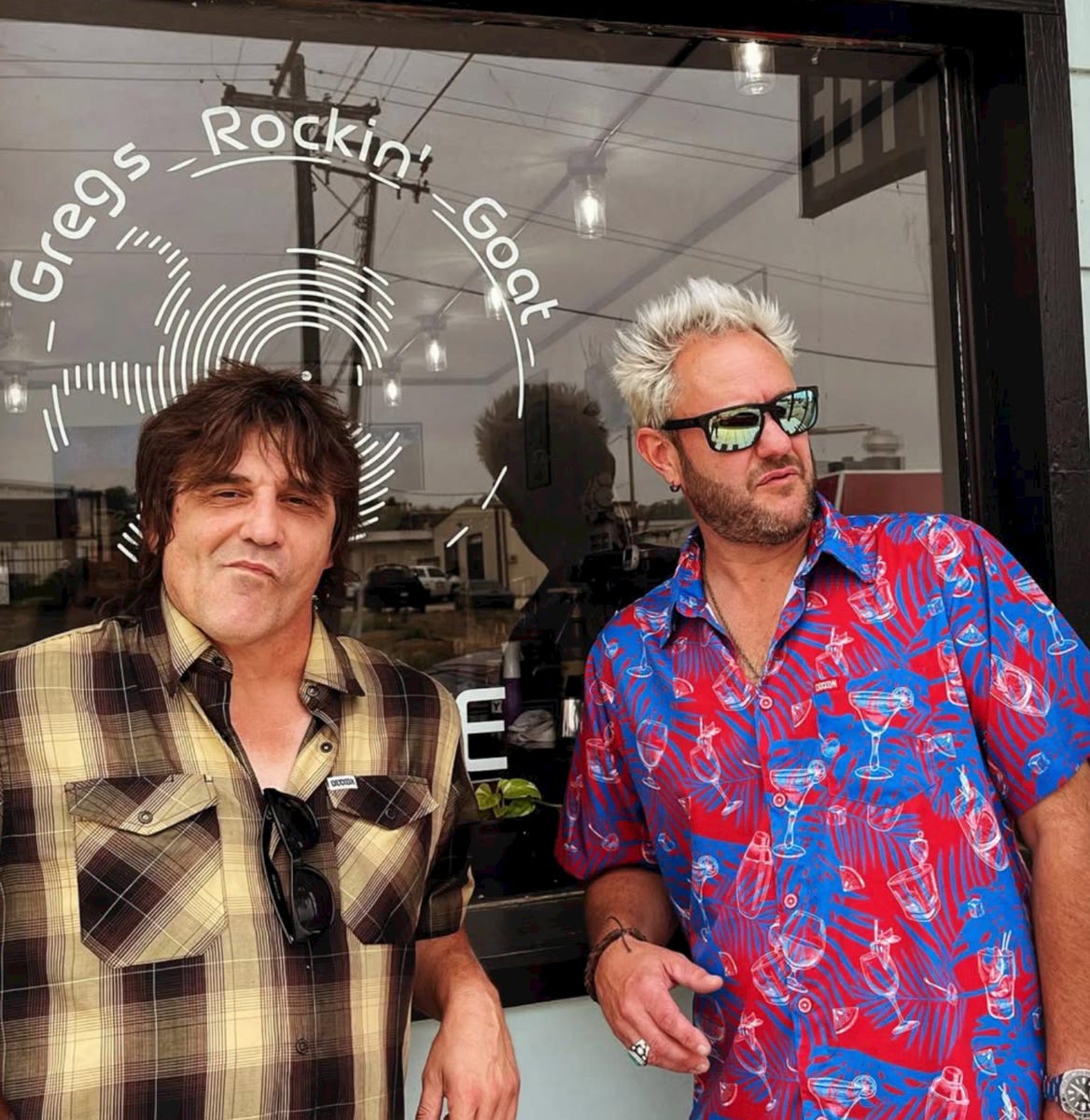
If it was a show day and there was a golf course nearby, we were absolutely playing. We’d be rolling into a venue on the bus and somebody would spot a golf course and yell, “Is that a golf course?!” Everybody would get excited immediately.
We’d start figuring out tee times around soundcheck. “Okay, soundcheck’s at three, so if we tee off early enough, we can make it work.”
A lot of times, the other bands on tour would join us too. Whether it was Candlebox, Finger Eleven, or whoever we were touring with, there were always a few golfers in every band.
It became a great way to bond with people outside of music. Some of my favorite memories on the road came from those mornings out on the course.
Greg: You’re an entrepreneur, and so are the other members of 3 Doors Down. You guys all seem to share that same mindset.
Greg Upchurch:
I think all of us are entrepreneurs because none of us were really built to work for somebody else.
No disrespect to anyone working a regular job, but I’ve always needed to create something of my own. I need to have a vision for what I’m building and where it’s going.
We all kind of share that mentality. It’s always, “Okay, that chapter was great… what’s next?”
People ask me all the time if I’m going to write a book someday. I always tell them, “Maybe — but I’m still living the story.”
I haven’t gotten to the ending yet.
What I do know is that my life has already been one hell of an adventure, and hopefully I’m only halfway through it.
At this stage, I still love playing music, and I know I can still play. But I’m also not 25 anymore. I’m 54 years old. I’m not piling back into a van and grinding it out like the old days. I’ve done that. I’ve paid those dues.
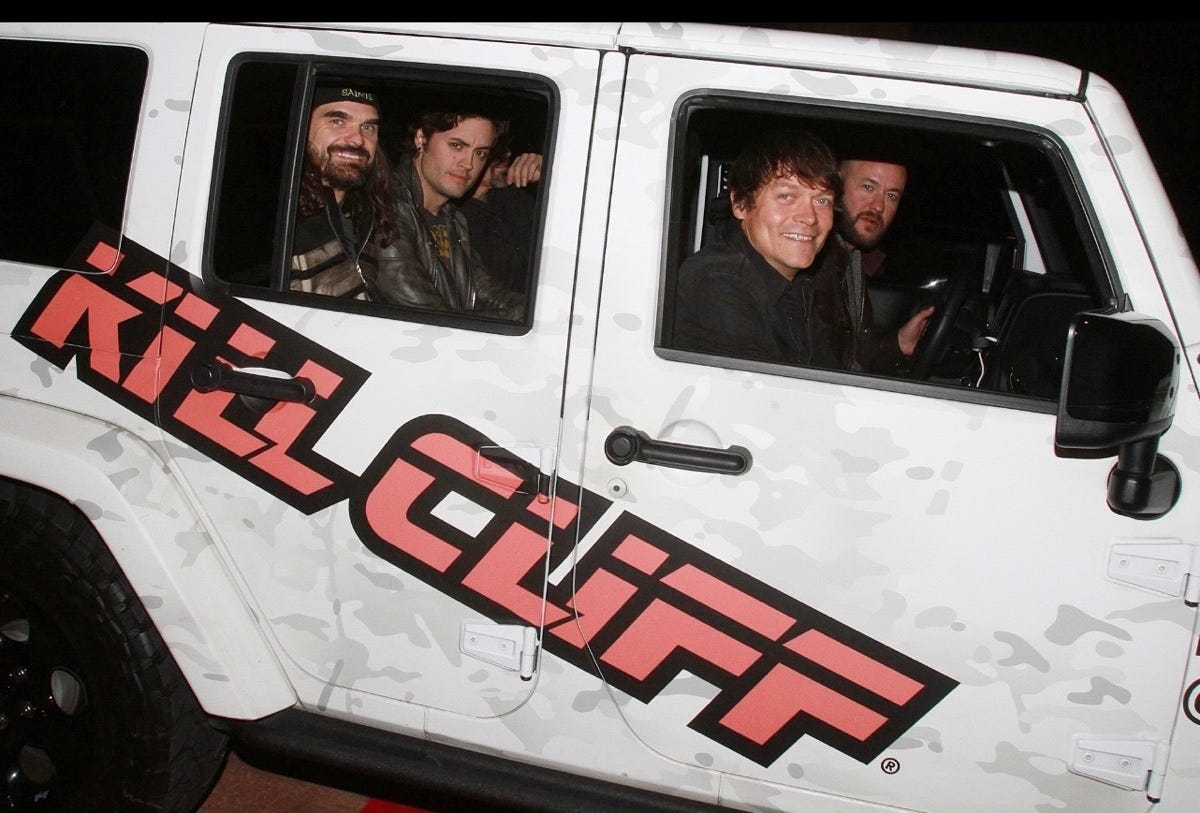
Now it’s about figuring out what the next chapter looks like — and building something meaningful on my own terms.
Thank you for reading my Substack! Your support means more than you know!