
I have to be careful here.
This is a topic I could go on for days about.
I should probably write a book about this topic.
How many times have I said that?
This time, though, I wouldn’t rule it out.
In due time.
I want to be clear.
Before coaches start firing off emails to me, I’ve personally witnessed some really incredible coaches.
I mean top-notch.
Game-changers.
“Get it” coaches.
Men and women who have positively impacted young athletes in their respective sports and in their personal lives.
They’re out there for sure.
I’m thankful, if not shocked, that I’ve actually seen one or two.
When you see them, you almost can’t believe they exist.
Yet, many do.
In my humble opinion, however, they are few and far between.
I truly believe some coaches shouldn’t be within a football field of the athletes they’re supposed to be developing.
If you’ve either played sports or had a child who was an athlete, you have no doubt seen what I’ve seen.
Humiliation is often brushed aside as “tough love.”
Off-the-charts, nonsensical screaming disguised as “accountability.”
Somewhere along the way, playing hurt and running until you puke became badges of honor.
If a player doesn’t like any of that stuff, they’re called “soft.”
Okay.
Don’t get me wrong.
There are plenty of coaches who coach tough—and sometimes it’s needed—if done right.
I have zero issues with that.
Sports are hard.
Pushing talented players to reach their max potential is what great coaches do.
I get it.
But sometimes, I think we can all acknowledge that some coaches can be certified loons.
I had the opportunity to tell Rachel Luba’s story for Unbreakable, a documentary series currently running on Amazon Prime.
After putting one of her video clips on our YouTube channel recently, I saw how it really connected with thousands of people.
Here is the clip:
It’s that part of her story that has always stuck with me.
Now, today, Rachel is a successful MLB agent.
She’s tough as nails, fiercely competitive and doesn’t exactly run from a challenge.
She was apparently wired that way from the beginning.
She dedicated most of her young life to gymnastics.
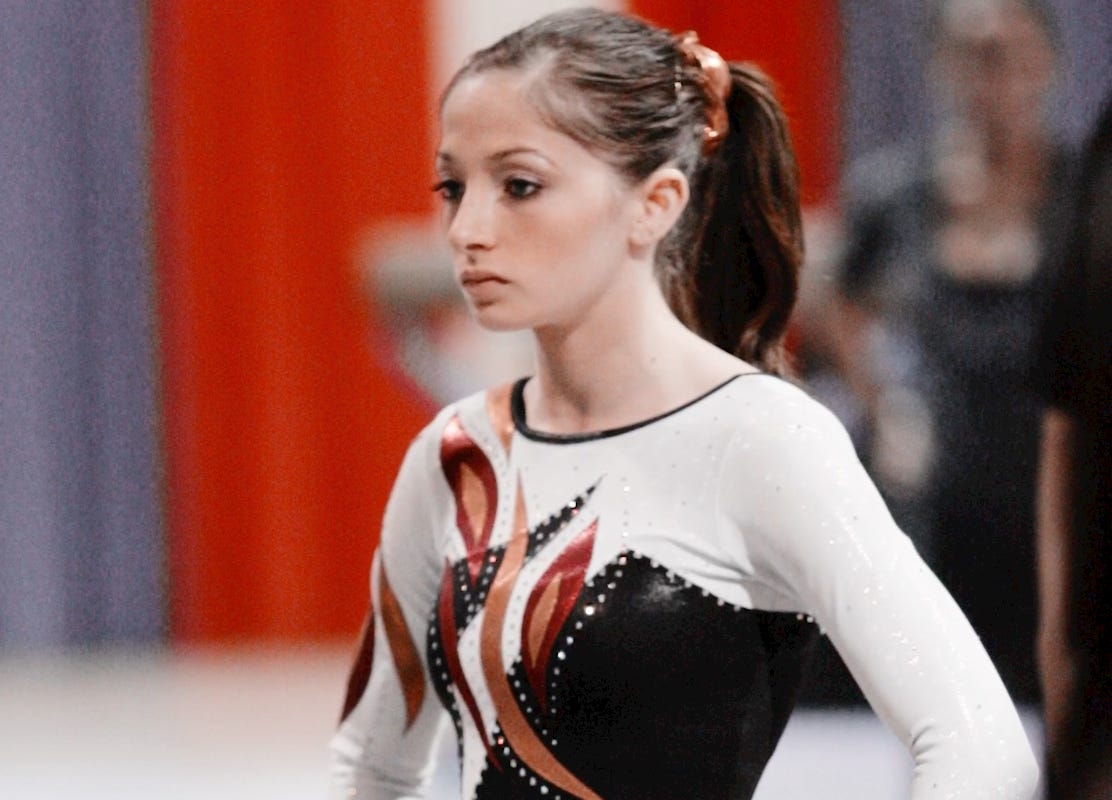
Rachel told us she didn’t consider herself the most talented gymnast growing up, but she outlasted athletes who had more natural ability because she was willing to work.
How dedicated to her craft was young Rachel?
Well, she would literally sleep in the splits so she’d be more flexible for practice the next morning.
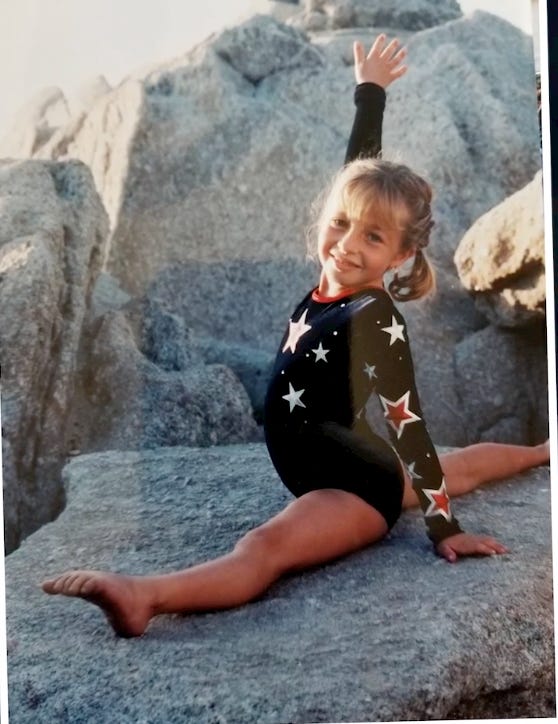
That hurts me just writing that.
On days off, she’d practice flipping uphill on the grass outside her house.
Why?
She wanted to be great.
In other words, if there was ever a young athlete who didn’t need a coach manufacturing motivation for her, it was Rachel Luba.
Unfortunately, she got a taste of what a bad coach looks like very early on.
Though Rachel says the sport is better in many ways today, she described gymnastics during that period of her life as abusive in multiple ways—mentally, physically and emotionally.
She remembers going home from practice in tears.
Then, right on schedule, her body began to change.
Rachel went through puberty and started developing from a little girl into a young woman.
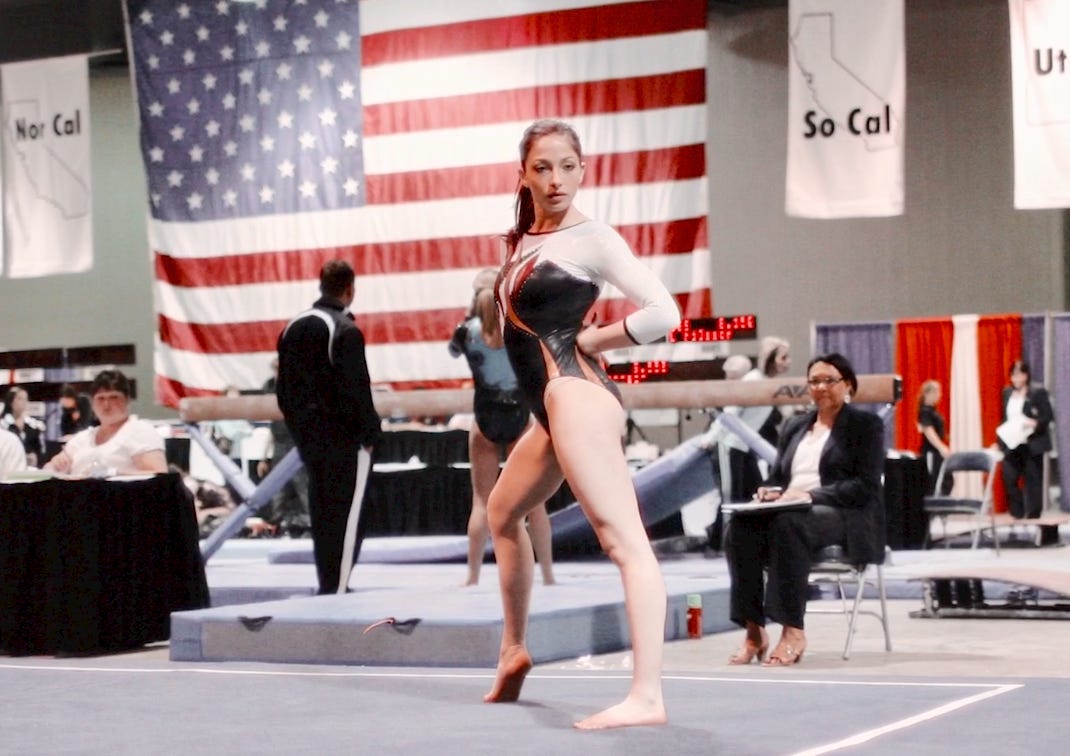
And apparently, to one coach, that was no bueno.
She remembers a coach looking at her stomach, hitting it and telling her to “suck it in.”
Then he pointed toward one of Rachel’s teammates and essentially told her that not everybody was blessed with a body like hers.
That teammate the coach pointed to was seven years old!
Rachel was 17.
Think about that for a second.
An adult was essentially telling a teenage girl that her changing body should look more like the body of a seven-year-old child.
When Rachel’s wrists began hurting, she remembers being told maybe they’d hurt less if she lost five pounds.
So the already muscular five-foot gymnast lost weight.
Eventually, Rachel says, she got down to a mere 89 pounds.
Then her wrist hurt again.
This time, a coach told her maybe it would feel better if she gained five pounds.
Rachel’s response to that lunacy?
“You can’t win.”
Nope.
Sometimes, you can’t.
Rachel remembers physical punishments when gymnasts didn’t stick a routine.
One could involve climbing ropes over and over—to the point where her hands were bleeding.
Sometimes, she said, the punishments seemed “purely to hurt you, to make you learn your lesson.”
That’s coming from one of the toughest people I’ve ever met.
Again, I am not arguing that coaches shouldn’t be tough.
Rachel isn’t either.
Neither of us believes every practice should end with ice cream and participation trophies.
There is no doubt sometimes coaches need to tell athletes things they don’t want to hear.
There are times they need to be benched or told to take another rep or ten.
Sometimes an athlete needs to be uncomfortable.
I get it.
But there’s a huge difference between demanding excellence and demeaning a young athlete.
As for Rachel, she eventually went on to be a gymnast (and a boxer, believe it or not) at UCLA.
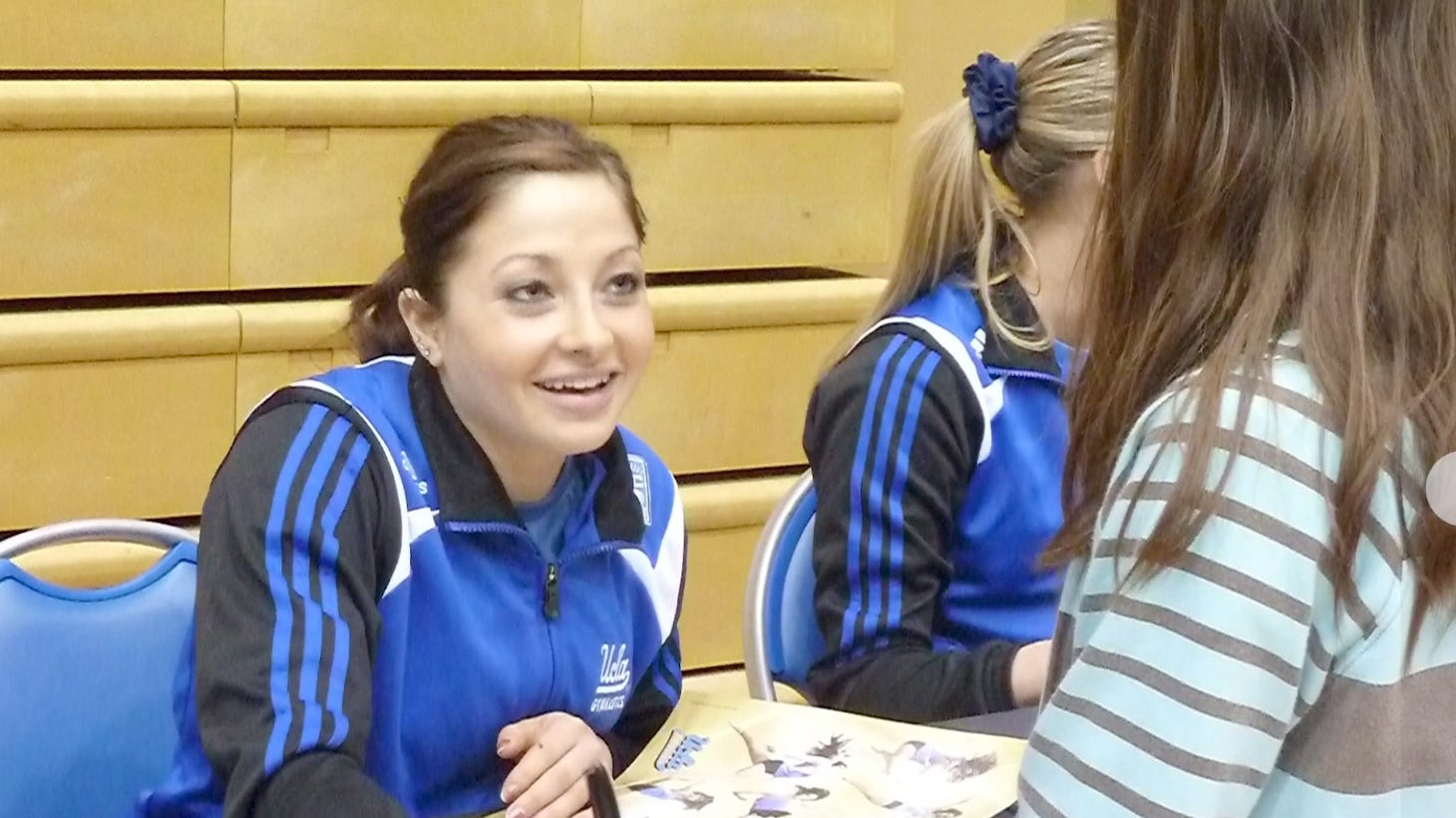
But some of the abuse that came her way early on still lingered.
She says she battled an eating disorder.
Her body was breaking down, and on several occasions, she says she came dangerously close to being hospitalized.
Then something changed.
The coaching.
Rachel credits the UCLA head coach at the time—someone she describes as “an incredible human”—with helping her recover.
And then Rachel said something in our interview that I haven’t forgotten.
Gymnastics was the sport that, in some ways, had “broken me.”
But with the right people around her, she said it “healed me too.”
Same athlete.
Same sport.
Different coaching environment.
Different impact.
And that’s why I don’t want anyone reading this to view this article as an indictment of coaches.
It’s almost the opposite.
It’s an acknowledgment of just how darn important the good ones are.
The coaches who teach that failure isn’t fatal and that sometimes every athlete has more to give are priceless.
To Rachel, failure is actually a good thing and part of the process.
In gymnastics, she said, you might literally fall on your face hundreds or thousands of times before finally sticking it.
The way I see it, that’s a good way to approach life.
She’s certainly walked the walk by going on and becoming an attorney and big-time agent running her successful business, Luba Sports.

Look, we all understand the world of sports isn’t for the faint of heart.
But if I had to do it all over again, I’d focus a lot more on exactly who was coaching my kids—and a lot less on a program’s track record or what they promised they could do for my son or daughter.
If you have young athletes in your household, I hope you do the same.